
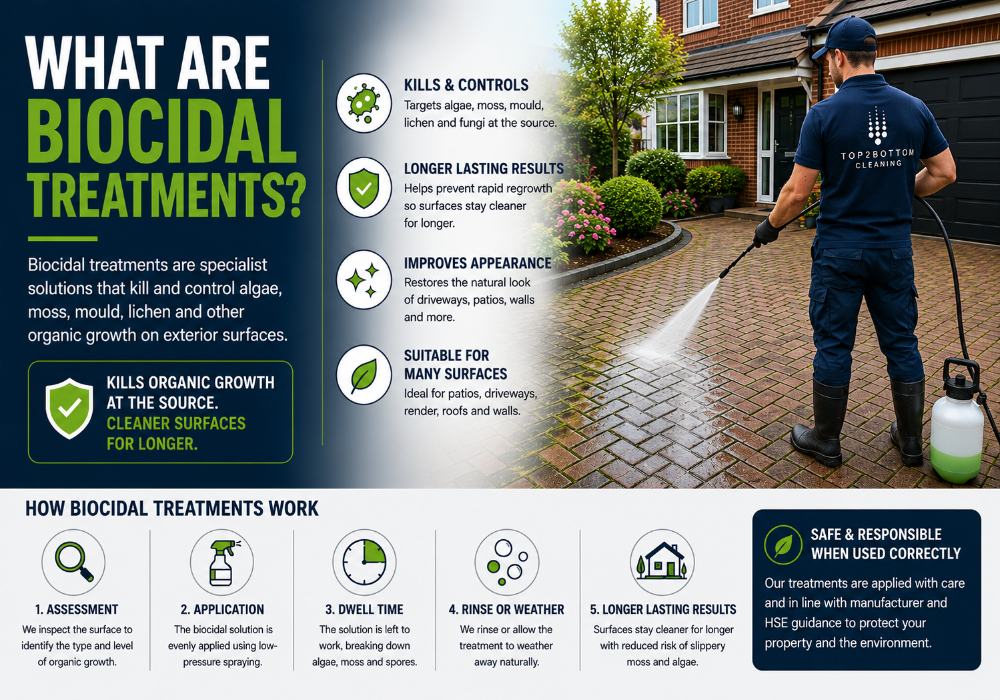
What Are Biocidal Treatments? This is a question many homeowners ask after having their patio, driveway or render professionally cleaned. A biocidal treatment is a specialist cleaning solution designed to kill and control biological growth such as algae, moss, mould, fungi and lichen on exterior surfaces.
Biocidal treatments are widely used in exterior cleaning because they help tackle the root cause of organic staining. Instead of only removing visible dirt, the treatment works to eliminate living spores and microorganisms that cause staining and regrowth.
These treatments are commonly applied to patios, driveways, render, roofs, walls, paths and commercial exterior surfaces. They are often used alongside softwashing or pressure washing to improve cleaning results and slow future growth.
When used correctly, a biocidal treatment can improve appearance, reduce slippery surfaces and extend the time between deep cleans. However, the correct product, dilution and application method all matter.
What Does A Biocidal Treatment Actually Do?
A biocidal treatment works by targeting biological contamination on exterior surfaces. This includes algae, moss, mould, mildew, fungi and lichen. These organisms thrive in damp, shaded or poorly ventilated areas and can spread quickly if left untreated.
Once applied, the treatment begins breaking down organic growth at a microscopic level. Over time, dead growth loosens, fades and weathers away naturally or through rinsing, depending on the cleaning method used.
It kills organic growth
The main purpose of a biocidal treatment is to kill living organisms on the surface. This is important because pressure washing alone may only remove the visible layer while leaving spores behind.
If the spores remain active, staining can return quickly. Biocidal treatments help reduce this problem by targeting the source of the regrowth.
It slows future regrowth
Although no treatment prevents growth forever, biocidal products can help slow down the return of algae and moss. This means surfaces often stay cleaner for longer after treatment.
The exact lifespan depends on weather, shade, drainage and the surrounding environment.
It improves surface appearance
As moss, algae and staining break down, the surface gradually regains a cleaner and brighter appearance. This can improve kerb appeal and make outdoor areas look better maintained.
Why Do Exterior Surfaces Need Biocidal Treatments?
Outdoor surfaces constantly face moisture, airborne spores, pollution and changing weather conditions. Over time, these factors encourage biological growth.
Areas with limited sunlight or poor drainage often suffer the most. North-facing walls, shaded patios and damp driveways usually experience faster moss and algae growth than open areas exposed to direct sunlight.
Algae growth is common on patios and render
Green staining is often caused by algae. It spreads easily across damp surfaces and can make patios, walls and paths look dirty.
On render, algae can create uneven green patches that spoil the appearance of a property.
Moss can damage surfaces over time
Moss holds moisture against paving, joints and exterior materials. Over time, this can contribute to surface deterioration and make outdoor areas slippery.
Driveways and pathways covered in moss may also become unsafe during wet weather.
Lichen can be difficult to remove
Lichen forms strong attachments to stone and paving surfaces. It often appears as black, white or grey spotting and can be harder to remove than ordinary algae.
Biocidal treatments can help weaken lichen growth so it gradually breaks down more effectively.
How Are Biocidal Treatments Applied?
Professional exterior cleaners usually follow a structured process when applying biocidal treatments. This helps achieve even coverage while protecting surrounding surfaces and vegetation.
The exact process depends on the type of surface, the level of contamination and the cleaning method being used.
Step 1: Surface inspection
Before treatment begins, the surface should be inspected carefully. This allows the cleaner to identify the material, level of staining and any areas that need special attention.
Cracked paving, damaged render or weak pointing may require extra care during cleaning.
Step 2: Surface preparation
Loose debris, leaves, weeds and heavy moss may need removing before treatment starts. On some surfaces, pressure washing or manual cleaning is carried out first.
This preparation helps the biocidal treatment reach the surface more effectively.
Step 3: Application of the treatment
The treatment is usually applied using low-pressure spraying equipment. The cleaner aims to cover the contaminated area evenly without excessive overspray.
Application rates depend on the product being used and the type of surface being treated.
Step 4: Dwell time
After application, the product needs time to work. During this stage, the treatment breaks down organic contamination.
Some surfaces may show visible improvement quickly, while others improve gradually over days or weeks.
Step 5: Rinsing or natural weathering
Some treatments are rinsed after the dwell period. Others continue working after application and weather away naturally over time.
The correct method depends on the cleaning product and the desired finish.
What Surfaces Can Biocidal Treatments Be Used On?
Biocidal treatments are suitable for many exterior surfaces. However, not all products suit every material. A professional assessment is important before the application.
Patios
Patios often collect algae, moss and lichen because they remain damp for long periods. Biocidal treatments help reduce slippery contamination and improve overall appearance.
Older patios may need gentle cleaning methods to avoid damaging joints or natural stone surfaces.
Learn more about our patio cleaning service.
Driveways
Driveways commonly suffer from moss, weeds, algae and organic staining. Biocidal treatments are often used after pressure washing to help slow future growth.
This is especially useful on block paving and textured concrete surfaces.
You can also view our driveway cleaning service.
Render
Render can develop green, red or black staining over time. Biocidal treatments are commonly used during softwashing to clean rendered walls safely.
Because render can be delicate, aggressive pressure washing is not always suitable.
Walls and brickwork
Brick walls and garden walls often suffer from damp-related algae growth. A suitable treatment can help restore a cleaner appearance and reduce future staining.
Commercial exterior surfaces
Shops, offices, schools and industrial buildings often use biocidal treatments to maintain exterior surfaces and improve presentation.
Large commercial areas may require specialist application equipment and careful planning.
How Biocidal Treatments Work Alongside Softwashing
Softwashing and biocidal treatments often work together. In many cases, the biocidal product forms a key part of the softwashing process.
Softwashing uses low pressure combined with specialist treatments to remove organic growth safely. Rather than relying only on water pressure, the treatment does much of the cleaning work.
Softwashing targets the cause
Pressure washing may remove visible contamination quickly, but softwashing and biocidal treatments target the biological source of the problem.
This can help reduce rapid regrowth on exterior surfaces.
Low pressure protects delicate materials
Render, painted walls and older surfaces may not tolerate aggressive pressure washing. Softwashing allows cleaners to treat staining while reducing the risk of damage.
Combined cleaning methods often work best
Many professional cleaners combine methods. For example, a patio may first be pressure-washed to remove heavy dirt and then treated with a biocide to tackle remaining algae spores.
What Are The Benefits Of Biocidal Treatments?
Biocidal treatments provide several practical benefits for homeowners and businesses. They improve appearance while supporting long-term maintenance.
Longer-lasting results
Because the treatment targets living growth, results often last longer than pressure washing alone.
This can reduce how often surfaces need deep cleaning.
Improved safety
Moss and algae can create slippery conditions on paths, patios and driveways. Treating these growths helps improve surface safety.
Cleaner appearance
Green staining and moss growth can make properties look neglected. Biocidal treatments help restore a cleaner and brighter appearance.
Reduced maintenance
Regular treatment can help prevent severe contamination from developing. This often makes future maintenance easier and less expensive.
Suitable for many surfaces
Biocidal treatments can be adapted for different exterior materials when applied correctly.
Are Biocidal Treatments Safe?
Biocidal treatments can be safe when used responsibly and according to manufacturer guidance. However, they must be handled carefully.
Professional cleaners should understand dilution rates, surface compatibility and environmental precautions before use.
Products must be used correctly
Incorrect use can damage plants, affect nearby surfaces or reduce the effectiveness of the treatment.
This is why proper training and experience matter.
Surrounding areas need protection
Plants, ponds and sensitive surfaces may need protection before treatment begins. Responsible cleaners take precautions to minimise risk.
Weather conditions matter
Rain, strong wind and extreme heat can affect application quality. Therefore, treatments should only be applied under suitable conditions.
The UK Health and Safety Executive provides guidance on the safe use of biocidal products.
How Long Do Biocidal Treatments Last?
The lifespan of a biocidal treatment depends on several factors, including weather exposure, drainage, shade and nearby vegetation.
Surfaces surrounded by trees or affected by constant moisture usually experience faster regrowth.
Sunny areas often stay cleaner longer
Direct sunlight helps dry surfaces more quickly, which reduces the ideal conditions for algae and moss growth.
Shaded areas may need more regular treatment
Patios under trees and north-facing walls often need more frequent maintenance because they remain damp for longer periods.
Maintenance plans can help
Many homeowners benefit from periodic retreatment to keep surfaces cleaner throughout the year.
Can Homeowners Apply Biocidal Treatments Themselves?
Some DIY products are available, but professional application is usually safer and more effective for larger or heavily contaminated areas.
Using the wrong product or dilution can cause staining, surface damage or environmental problems.
DIY mistakes are common
Common mistakes include over-applying products, failing to protect plants or using treatments on unsuitable surfaces.
Professional cleaners understand surfaces
Experienced exterior cleaners understand how different materials react to treatments and weather conditions.
Commercial properties often need specialist equipment
Larger areas may require professional spraying systems, access equipment and controlled application methods.
Common Myths About Biocidal Treatments
There are several misunderstandings about biocidal treatments and exterior cleaning.
Myth 1: Pressure washing alone is enough
Pressure washing removes visible dirt, but it may not kill the spores causing regrowth.
Myth 2: Biocidal treatments work instantly every time
Some results appear quickly, but many surfaces improve gradually over time.
Myth 3: All treatments are the same
Different products suit different surfaces and contamination levels. Professional assessment is important.
Myth 4: Treatments stop growth forever
No treatment prevents regrowth permanently. Exterior surfaces remain exposed to weather and airborne spores.
When Should You Consider A Biocidal Treatment?
You should consider a biocidal treatment if your exterior surfaces regularly develop green staining, moss, algae or lichen.
It can be particularly useful after pressure washing to help slow the return of contamination.
After driveway cleaning
Driveways often benefit from treatment after pressure washing because spores can remain deep within the surface texture.
After patio cleaning
Patios exposed to shade and moisture usually experience recurring algae growth. Biocidal treatment can help reduce this problem.
For render maintenance
Rendered walls often require specialist softwashing and treatment to maintain a clean appearance safely.
What Should Homeowners Do Next?
Biocidal treatments can play an important role in exterior cleaning and maintenance. They help tackle algae, moss, mould and lichen while supporting longer-lasting cleaning results.
However, choosing the correct product and application method matters. Different surfaces require different levels of care, especially when dealing with render, natural stone or older paving.
If your patio, driveway, render or exterior walls suffer from recurring staining or moss growth, professional advice can help you choose the safest and most effective cleaning solution.
For the best results, speak to an experienced exterior cleaning company that understands softwashing, pressure washing and responsible biocidal treatment application.


