
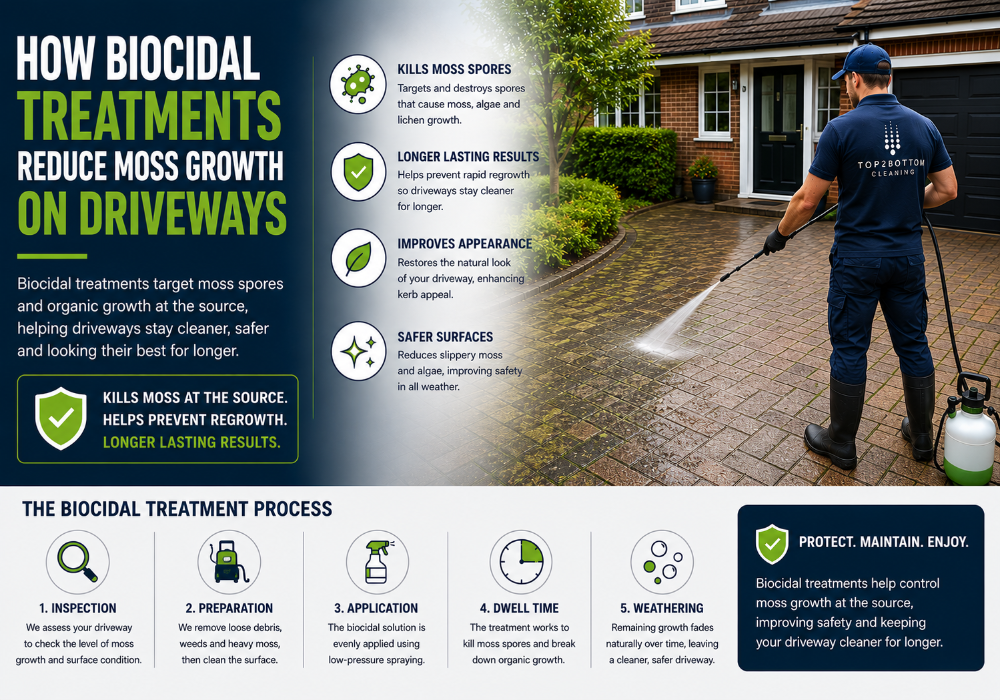
How Biocidal Treatments Reduce Moss Growth On Driveways is something many homeowners want to understand after repeatedly cleaning moss from their paving. Moss growth is one of the most common driveway problems in the UK because outdoor surfaces face constant moisture, shade and changing weather conditions.
Many driveways become green, slippery and stained over time. Moss can spread quickly across block paving, concrete and stone surfaces, especially in shaded or damp areas. Unfortunately, simply removing visible moss often does not solve the problem long-term.
Biocidal treatments help tackle moss growth more effectively by targeting the biological spores and organic contamination responsible for regrowth. Rather than only cleaning the surface, the treatment works deeper to reduce future moss development.
When used correctly, biocidal treatments can help driveways stay cleaner for longer while improving safety and appearance.
Why Moss Grows On Driveways
Moss thrives in damp, shaded environments where moisture remains on the surface for long periods. Driveways often create ideal conditions for this type of organic growth.
Over time, dirt, debris and moisture build up across paving joints and textured surfaces. This creates an environment where moss can spread rapidly.
Shade encourages moss growth
Driveways surrounded by trees, fences or buildings usually remain damp for longer after rainfall.
Because sunlight helps dry surfaces naturally, shaded areas often develop moss much faster.
Poor drainage increases moisture retention
If water pools on the driveway surface, moss growth often becomes more severe.
Blocked drainage channels and uneven paving can make this problem worse.
Dirt and debris feed organic growth
Leaves, soil and organic debris trapped between paving joints help moss establish itself more easily.
Without regular maintenance, moss can spread across larger sections of the driveway.
Textured surfaces trap spores
Block paving, concrete and natural stone often contain small pores and joints where spores settle.
This allows moss and algae to return even after visible growth has been removed.
Why Moss On Driveways Is A Problem
Moss does more than affect appearance. Over time, it can create safety risks and contribute to driveway deterioration.
Moss creates slippery surfaces
Wet moss can make driveways dangerous during rainy weather. This increases the risk of slips and falls for homeowners and visitors.
Driveways begin to look neglected
Heavy moss growth can make a property appear poorly maintained.
Green staining and thick moss often reduce kerb appeal significantly.
Moss traps moisture against the surface
Moss absorbs and retains water. This constant moisture exposure may contribute to surface wear over time.
Weeds often follow moss growth
Where moss develops, weeds and other unwanted growth frequently appear soon afterwards.
This can make the driveway even harder to maintain.
What Is A Biocidal Treatment?
A biocidal treatment is a specialist cleaning solution designed to kill and control biological growth on exterior surfaces.
These treatments are commonly used on driveways, patios, render, roofs and walls to tackle moss, algae, mould and lichen.
Biocides target living organisms
The treatment works by breaking down the organic contamination responsible for growth and staining.
This helps reduce the chance of rapid regrowth after cleaning.
They support longer-lasting results
Pressure washing alone may remove visible moss but leave spores behind.
Biocidal treatments help address this issue by treating the biological source of the problem.
They are widely used in exterior cleaning
Professional exterior cleaners frequently use biocidal treatments alongside softwashing and pressure washing.
This combination often delivers better long-term results.
How Biocidal Treatments Reduce Moss Growth On Driveways
Biocidal treatments work by attacking the moss at a biological level. Instead of simply removing surface contamination, the treatment helps kill spores and weaken remaining growth.
They kill moss spores
Moss spreads through microscopic spores that settle within paving joints and textured surfaces.
Biocidal treatments help destroy these spores, which reduces the speed of future regrowth.
They break down the remaining organic matter
After visible moss has been removed, traces of biological contamination often remain hidden within the surface.
The treatment continues working after application to break down this remaining material.
They help driveways stay cleaner longer
Because the treatment tackles the source of the contamination, results usually last longer than pressure washing alone.
However, regular maintenance is still important because no treatment prevents regrowth permanently.
How Biocidal Treatments Are Applied To Driveways
Professional driveway cleaning companies usually follow a structured process when applying biocidal treatments.
The exact method depends on the driveway material and level of contamination.
Step 1: Driveway inspection
The surface is assessed carefully before treatment begins. This helps identify moss levels, drainage issues and any damaged areas.
Loose joints, cracked paving, and uneven sections may need extra care.
Step 2: Surface preparation
Loose debris, weeds and heavy moss are often removed before treatment.
Many driveways are pressure-washed first to remove surface dirt and thick organic growth.
Step 3: Application of the biocidal treatment
The treatment is applied evenly using low-pressure spraying equipment.
This allows the solution to penetrate joints and textured surfaces more effectively.
Step 4: Dwell time
The product needs time to break down spores and organic contamination.
During this stage, the remaining moss gradually weakens.
Step 5: Ongoing weathering
Some treatments continue working after application. Over time, remaining contamination fades and washes away naturally.
Why Pressure Washing Alone Often Is Not Enough
Pressure washing can remove visible moss quickly, but it does not always prevent the problem from returning.
Visible growth is only part of the problem
Moss spores often remain deep within joints and porous surfaces after washing.
This allows regrowth to begin again soon after cleaning.
Driveways can become green again quickly
Without treatment, damp and shaded driveways may begin showing algae and moss within a relatively short time.
Biocidal treatments improve long-term results
Applying a treatment after cleaning helps reduce rapid regrowth and supports a cleaner appearance for longer.
Which Driveway Surfaces Benefit From Biocidal Treatments?
Biocidal treatments can be used on many types of driveway surfaces when applied correctly.
Block paving driveways
Block paving commonly suffers from moss growth between joints.
Biocidal treatments help reduce organic contamination within these areas.
Learn more about our driveway cleaning service.
Concrete driveways
Concrete surfaces often develop algae and dark staining over time.
Treatment helps improve appearance while reducing slippery contamination.
Natural stone driveways
Natural stone can become porous as it ages. Softwashing and biocidal treatments often provide a safer alternative to excessive pressure washing.
Pattern-imprinted concrete
Decorative surfaces require careful cleaning to avoid damage or uneven appearance.
Controlled treatment methods are especially important here.
How Long Do Biocidal Treatment Results Last?
The lifespan of the treatment depends on environmental conditions and driveway maintenance.
Sunny driveways usually stay cleaner longer
Sunlight helps dry surfaces more quickly after rain.
This reduces the damp conditions moss prefers.
Shaded areas may need more frequent treatment
Driveways beneath trees or beside high walls often experience faster regrowth.
Regular maintenance extends results
Sweeping debris regularly and treating early signs of growth can help prolong the clean appearance.
Can Homeowners Apply Biocidal Treatments Themselves?
DIY biocide products are available, but professional treatment is often safer and more effective for larger or heavily contaminated driveways.
Incorrect use can damage surfaces
Using unsuitable products or incorrect dilution rates may stain paving or affect surrounding areas.
Professional cleaners understand application methods
Experienced exterior cleaners understand how different driveway materials respond to treatments.
Safety and environmental care matter
Responsible application is important to protect plants, drainage systems and nearby surfaces.
The Health and Safety Executive provides guidance on the safe use of biocidal products.
How Biocidal Treatments Improve Driveway Safety
Reducing moss growth does more than improve appearance. It can also make outdoor areas safer.
Cleaner driveways reduce slip risks
Removing moss and algae improves grip underfoot, especially during wet weather.
Better drainage improves surface drying
Removing organic build-up helps rainwater drain more effectively across the surface.
Driveways become easier to maintain
Cleaner surfaces are generally easier to keep tidy throughout the year.
How Often Should Driveways Be Treated?
The ideal treatment schedule depends on location, weather exposure and surrounding vegetation.
High-risk areas may need annual treatment
Driveways in shaded or damp environments often benefit from yearly maintenance.
Low-risk areas may need less frequent treatment
Sunny and well-drained driveways may stay cleaner for longer periods.
Early treatment prevents severe build-up
Addressing moss growth early usually reduces the need for more intensive cleaning later.
Common Myths About Moss Removal And Biocidal Treatments
Several misconceptions surround driveway cleaning and moss treatment.
Myth 1: Pressure washing permanently removes moss
Pressure washing removes visible growth but may not eliminate spores.
Myth 2: Moss only grows on old driveways
Even newer driveways can develop moss if conditions remain damp and shaded.
Myth 3: All cleaning chemicals work the same way
Different treatments suit different surfaces and contamination levels.
Myth 4: Moss regrowth can be stopped forever
No treatment prevents regrowth permanently because outdoor surfaces remain exposed to weather and spores.
Why Professional Driveway Cleaning Matters
Professional driveway cleaning companies understand how to combine pressure washing, softwashing and biocidal treatments safely.
Professionals assess the driveway properly
Surface condition, contamination levels and drainage issues all influence the cleaning approach.
Professional equipment improves consistency
Controlled application methods help achieve more even and reliable results.
Correct treatment protects the driveway
Using the right methods helps reduce unnecessary wear while improving cleaning performance.
What Should Homeowners Do Next?
Biocidal treatments can play an important role in reducing moss growth on driveways. By targeting spores and organic contamination directly, they help surfaces stay cleaner and safer for longer.
Although pressure washing removes visible moss quickly, combining cleaning with a professional biocidal treatment usually provides better long-term results.
If your driveway regularly becomes green, slippery or heavily contaminated, professional driveway cleaning and moss treatment may help restore its appearance while reducing future regrowth.
For the best outcome, choose an experienced exterior cleaning company that understands driveway materials, safe treatment application and long-term maintenance.


